
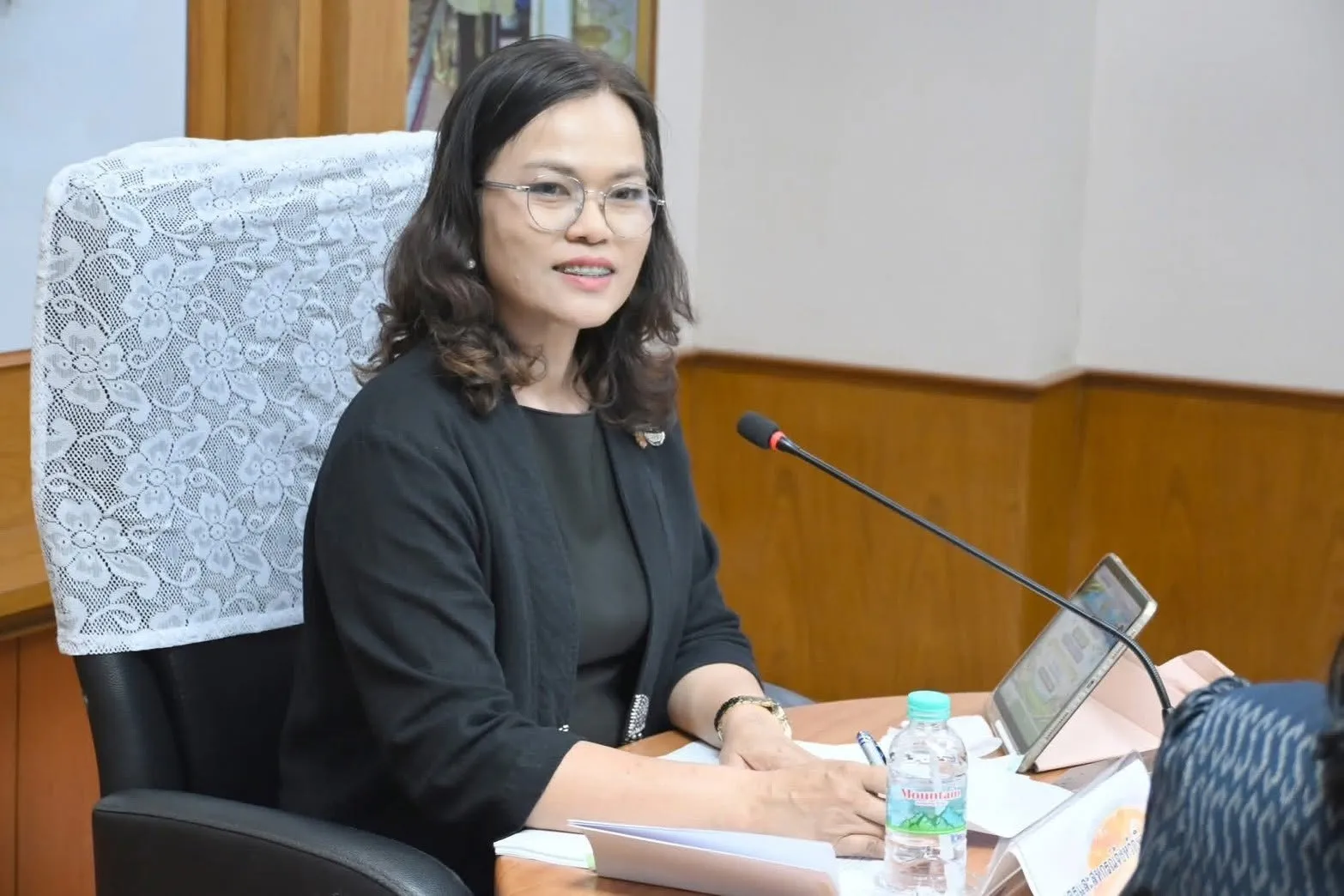
On November 10, 2026, Mrs. Thunphitcha Theraratchanon, Director of the 2nd Regional Office of Agricultural Economics (Director of ROAE2), assigned Mrs. Suthatip Srisanpakit, Senior Professional Level Policy and Plan Analyst, to attend the 5/2026 Meeting of the Phitsanulok Provincial Agricultural Driving Committee (SCP) at the Phra Attharot Meeting Room, Phitsanulok Provincial Agricultural and Cooperatives Office, with Miss Kanok-on Saeng-arun, Phitsanulok Provincial Agricultural and Cooperatives Officer, presiding over the meeting.
Six matters to acknowledge:
- Water situation and dry-season cultivation (off-season rice) water management plan for 2026/27 in Phitsanulok Province
- Assignment of inspection areas and expedited performance monitoring by Inspectors-General of the Ministry of Agriculture and Cooperatives
- Provincial Agricultural and Cooperatives Action Plan for Fiscal Year 2026, Q4 progress report on project implementation under the action plan, and budget disbursement and government expenditure acceleration measures for Fiscal Year 2027
- Directives of the Advisor to the Deputy Minister of Agriculture and Cooperatives (Mr. Mitti Tiyapairat)
- Policy on driving key agricultural commodities by the Governor of Phitsanulok Province
- Policies and operational driving guidelines of the Ministry of Agriculture and Cooperatives for Fiscal Year 2027 by the Minister of Agriculture and Cooperatives (Mr. Suriya Juangroongruangkit)
One matter to consider:
- Preparation of the provincial monthly agricultural production calendar for food security and nutrition management for 2026
On this occasion, the ROAE2 representative provided comments on the preparation of the monthly production calendar, noting that the province can utilize it to plan balanced commodity management—particularly during peak harvest periods when concentrated supply may cause agricultural commodity prices to drop. It was suggested that this could be structured as an early warning system 2–3 months ahead of peak harvest periods to prepare mitigation measures and address issues in a timely manner.
Photo/News: Public Relations Working Group, ROAE2 Phitsanulok