
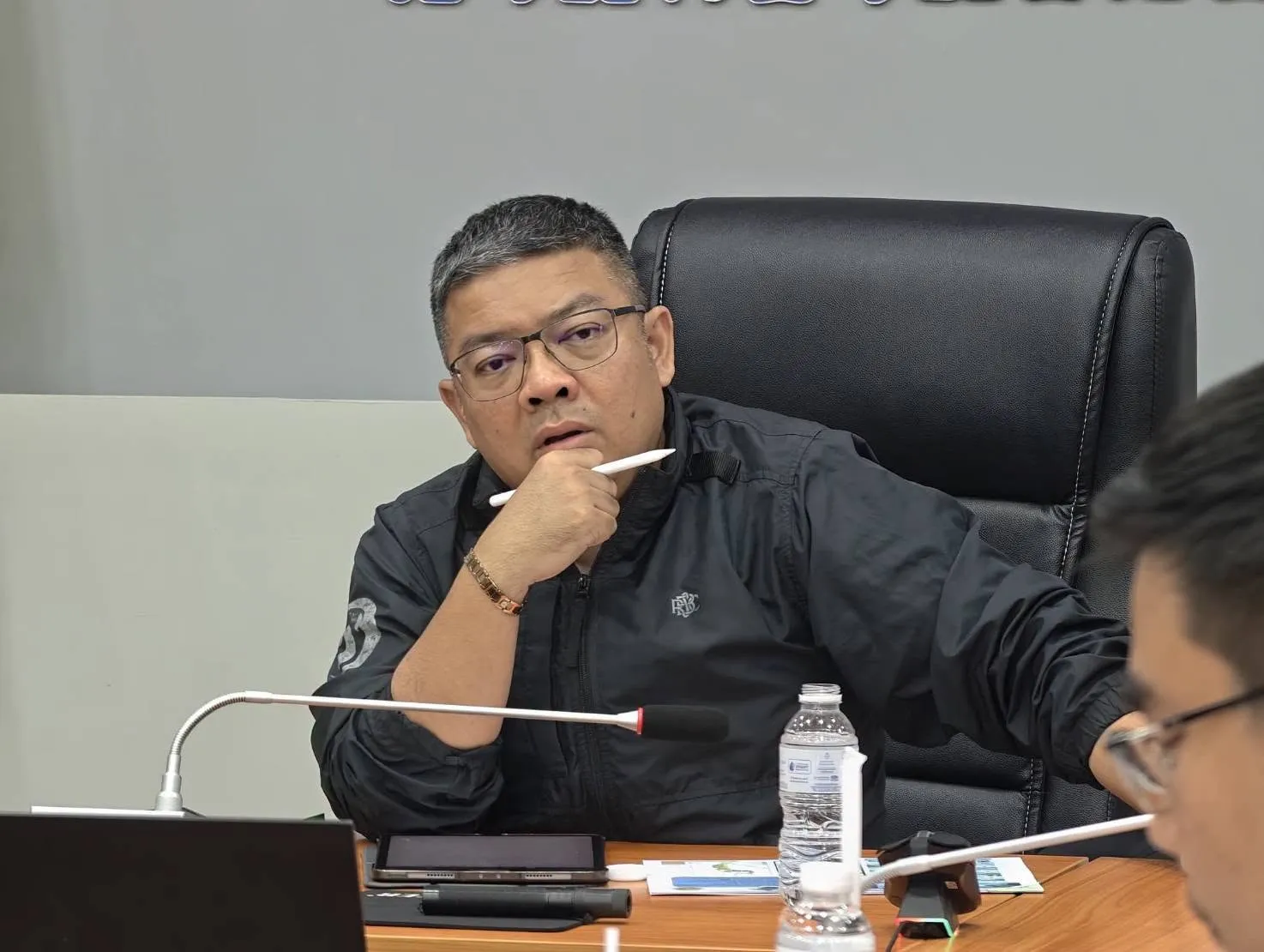
On November 13, 2026, Mr. Krongsak Songraksa, Deputy Secretary-General of the Office of Agricultural Economics (Deputy Secretary-General of OAE), accompanied by personnel from the 2nd Regional Office of Agricultural Economics (ROAE2) Phitsanulok, attended a consultative meeting with the Sukhothai Irrigation Project at the Saritphong Meeting Room, Sukhothai Irrigation Project. The meeting convened to consider guidelines for driving the Thung Pak Phra Lowland Project (SK6) in Sukhothai Province, focusing on integrating water resource management alongside farmer occupational development in alignment with local area conditions and water situations.
The meeting prioritized reviewing and revising the appointment order for the Working Group on Driving the Thung Pak Phra Lowland Project (SK6). Participants deliberated on refining the powers and duties of each sub-working group to ensure clarity and alignment with their respective missions, as well as adding relevant agencies to strengthen inter-agency coordination mechanisms and operational integration across all dimensions.
On this occasion, the Deputy Secretary-General of the Office of Agricultural Economics assigned ROAE2 Phitsanulok to study and compile data across three key dimensions:
- Spatial Dimension: Studying physical characteristics, soil conditions, and climate to assess the area’s potential and constraints for agricultural occupations.
- Agricultural Commodity Dimension: Studying the rice production and marketing situation—covering popular rice varieties cultivated by farmers, average yield per rai, market demand, and the suitability of rice varieties to local conditions—to inform production alternatives aligned with area potential and market opportunities.
- Farmer Dimension: Studying farmer behaviors, attitudes, and adaptation approaches to understand the factors influencing occupational decision-making, as well as farmers’ needs and constraints under prevailing area conditions and water situations.
Findings from all three dimensions will be analyzed and interlinked to evaluate the problems, potential, and constraints facing farmers’ livelihoods in the area, as well as to formulate appropriate recommendations and occupational development guidelines. This synthesis will place primary emphasis on area conditions, water situations, production suitability, market opportunities, and farmer needs to support occupational adaptation and create opportunities for sustainable, long-term income growth.
These efforts reflect the role of the Office of Agricultural Economics in providing agro-economic data and analysis to support planning and policy formulation for developing the Thung Pak Phra Lowland Area (SK6), with ROAE2 Phitsanulok serving as the key supporting agency for local-level study and data analysis. This links water resource management with occupational development and economic opportunities for farmers, ultimately leading to agricultural sector development that is sustainable and aligned with local area potential.
Photo/News: Public Relations Working Group, ROAE2 Phitsanulok