
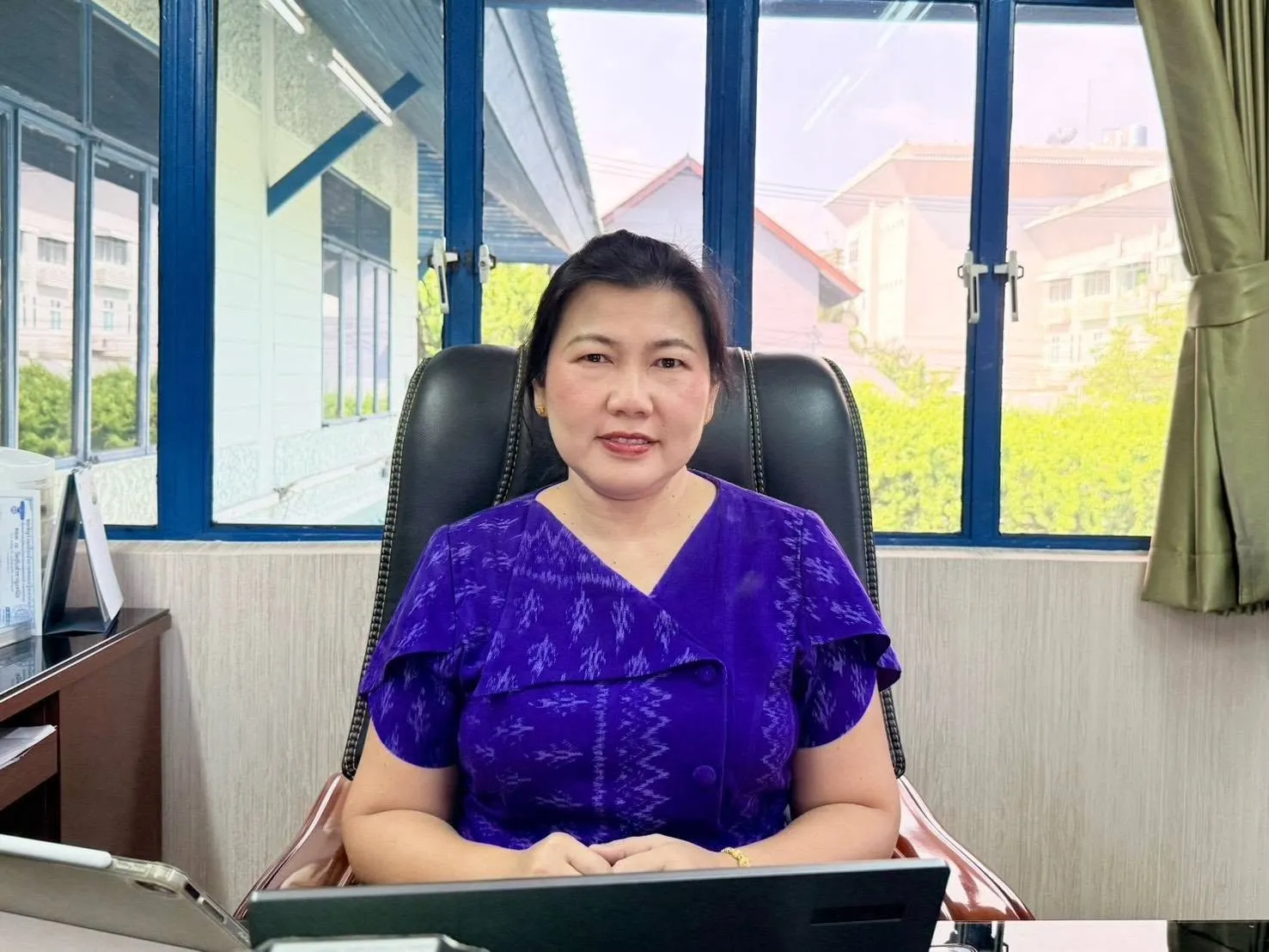
On November 6, 2026, Mrs. Thunphitcha Theraratchanon, Director of the 2nd Regional Office of Agricultural Economics (Director of ROAE2 Phitsanulok), accompanied by Mr. Warit Choosakul, Senior Professional Level Policy and Plan Analyst, and Mr. Thanakorn Kaewjaroon, Professional Level Economist, attended a meeting on monitoring guidelines and operational action plans for projects under the Strategic Plan for Social Empowerment (Royal-Initiated Projects) and the Mobile Agricultural Clinic Project under Royal Patronage for Fiscal Year 2027. The meeting took place at the AEOC Meeting Room, 2nd Floor, Agricultural Economic Operation Center Building, Office of Agricultural Economics, and via Zoom Cloud Meetings, with Mr. Chatthaphon Sayaphan, Director of the Center for Program Evaluation, presiding over the meeting.
On this occasion, the meeting deliberated on monitoring guidelines and operational action plans for Royal-Initiated Projects, including performance follow-up (Follow-up 2026) and the evaluation of Agro-Economic Clinics for Fiscal Year 2027. Participants also reviewed monitoring areas, budget allocations, sample sizes, and questionnaires and interview forms for farmers, personnel, and service recipients, aiming to establish a clear data system for monitoring and evaluation right from the outset.
A central focus of operations in Fiscal Year 2027 is integrating monitoring and evaluation tasks with the ECON Policy Framework. Rather than merely assessing whether projects were executed according to plan, this approach encompasses the entire cycle—from defining decision-making questions and designing indicators and data collection tools, to analyzing actual outcomes and synthesizing recommendations for operational improvement.
Regarding the monitoring of Royal-Initiated Projects, emphasis is placed on evaluating the extent to which project outcomes resolve challenges and improve farmers’ quality of life. This evaluation applies the Logic Model framework alongside the 4E dimensions—Economy, Efficiency, Effectiveness, and Equity—to analyze outcomes against targets and baseline data, while also assessing supporting factors, constraints, and risks to the sustainability of results.
Meanwhile, monitoring of the Mobile Agricultural Clinic Project focuses on post-service outcomes—specifically examining whether farmers have practically applied the knowledge or advice received and to what degree their problems have been resolved. These findings are subsequently used to analyze the root causes of local challenges and formulate recommendations at the agency, provincial, and overarching policy levels.
This approach links local monitoring findings directly to data-driven decision-making, enabling the evaluation of which initiatives should be scaled up, refined, or revised so that monitoring and evaluation tangibly advance operational performance.
Additionally, the meeting considered guidelines for formulating project proposals for the monitoring and evaluation of Royal-Initiated Projects for Fiscal Year 2028, ensuring continuity in evaluation processes and the utilization of field data in upcoming operational cycles.
Photo/News: Public Relations Working Group, ROAE2 Phitsanulok